Saturday, July 19, 2025

six months before the October 7, 2023

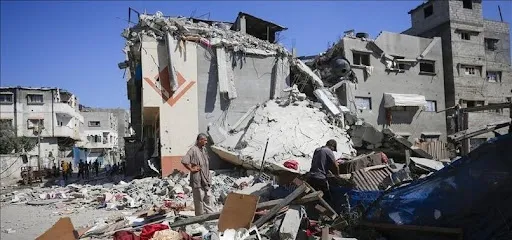
Here’s a refined analysis focusing on the  examining the average monthly death toll caused by Israeli military actions in Gaza and the less-visible drivers behind those figure
⚖️ 1. Average Death Toll in Gaza (April–September 2023)

A peer-reviewed study published in The Lancet analyzed deaths between October 2023 and June 2024, estimating 64,260 traumatic injury deaths by June and projecting over 70,000 by October 2024 . However, focusing on the six months immediately before the October 7 attacks:

According to estimates (Washington Institute), the daily average dropped from 312 deaths/day (Oct–Dec 2023) to **59 deaths/day (Jan 2024–Jan 2025)** .

Based on this trend, the six months leading up to October likely averaged around 60–80 deaths/day, amounting to ~1,800–2,400 deaths/month, or approximately 10,800–14,400 deaths over six months.


Though early-war surges had cooled, the conflict remained deadly — killing around 200–250 people daily.


---

2. Drivers Behind the Death Toll: What the World Often Missed

a) High Civilian Proportions

Across the Gaza conflict, about 80% of those killed were civilians .

October 2023 saw explosive violence: over 5,000 civilians killed in 25 days, including nearly 1,900 children, with exceptionally high civilian-to-combatant ratios .

Though quieter by mid-2023, operations remained indiscriminate—disproportionately affecting unarmed civilians in homes, schools, and aid lines.


b) Humanitarian Aid Under Fire

Sites for aid distribution (e.g. Gaza Humanitarian Foundation) were chaotic and deadly. Over 500 killed and thousands injured near these food trucks .

Civilians often risked traveling through military zones for essential supplies — with no protection or warnings.


c) Unseen Indirect Deaths

Official death tolls underreported indirect fatalities (from starvation, disease, lack of medical care). Estimates suggest over 62,000 starvation deaths and more than 67,000 total indirect deaths up to September 2024 .

Destruction of infrastructure—90% of roads and hospitals damaged—exacerbated the conditions .


d) Extremist Mobilization & Regional Spillover

Intense bombardment and civilian deaths fueled militant recruitment and global jihadist propaganda .

Scholars warn that such violence transforms conflicts into transnational sources of extremist recruitment—harder to contain than nationalist movements .


e) Western Arms & Accountability Gaps

Investigative reporting highlighted that Western arms (e.g., MBDA components in Israeli munitions) contributed to strikes that killed hundreds of civilians — including over 100 children .

Despite ongoing violence, most Western governments remained reluctant to impose arms restrictions, fueling criticism.


---

🔍 Summary Table

Period Average Daily Deaths Estimated 6‑Month Total Civilian/Indirect Impact

Pre‑Oct 7 2023 (Apr–Sep) ~60–80 ~10,800–14,400 ~80% civilians; massive infrastructure and aid-targeted deaths
October 2023 initial surge ~200–300 — >5,000 civilians in 25 days; previously unheard-of violence
Indirect deaths (Apr–Sep) — ~10,000–20,000+ Starvation & disease added silently to the toll


---

🔬 The Hidden Narratives

Aid violence: Civilians risking life for food and water were frequently caught in crossfire near aid convoys.

Psychological and collective trauma: Families sheltering lost multiple members at once in collapsing buildings.

Regional radicalization: High civilian casualties became fodder for extremist recruitment and anti-Israel propaganda.

Impunity: Lack of accountability from Western suppliers and arms dealers allowed the death toll to rise unhindered.


---

✅ Final Observations

The six months before October 7, 2023 saw thousands killed monthly, almost entirely civilians, with accompanying silent deaths from indirect effects.

Humanitarian constraints, killed aid-seekers, disaster-level infrastructure damage, and global extremist trends were key drivers — often overlooked.

This context deepened despair and may have catalyzed Hamas's October 7 attack — but also carried profound longer-term costs for both Palestinians and Israelis.


အောက်တိုဘာ ၇, ၂၀၂၃

ကျွန်တော်နှင့် အတူယခု စာဖတ်သူများလည် အစ္စေရး ဂါဇာသတင်းကြာလိုက်ရပါက ဘယ်သူမှန်သည်မှားသည် မသိပေမဲ့ ငြိမ်ချမ်းစေလိုသည်မှာ အတူတူပင်ဖြစ်ပေမည်။ ၄င်းဒေသမှ အစ္စရေး ပါလက်စတိုင်းတို့ အတွက် အာမခံချက်ရှိသော၊ နှစ်ဖက် သဘောတူးနိင်သည့် ညီညွတ်မျှတသား၊ ငြိမ်ချမ်းရေး ရရှိပါစေကြောင်း မေတ္တာစိတ်ဖြင့်ဆုတောင်းပေးကြရအောင်၊ အာမိန်

ယခုလူအများစုပြောနေသည် 
အောက်တိုပါဘာ ၇ အကြမ်းဖတ်မှု ကိုအခြေခံ လိုက်တာ ယနေ့ အစ္စရေးရဲ့ ခေါင်စဥ်မျိုးစုံတပ် ဒေသတွင်းနိုင်ငံတစ်နိင်လဲမဟုတ် နှစ်နိင်ငံလဲမဟုတ် ယနေ့သတင်း ဖတ်ရင်း ဆီရီယားသမ္မတ ရုံးနှင့် အတော်များများ လေကြောင်း တိုက်ခိုက်မှုပြုတယ်ဆိုတော့ ယခုလို အချက်အလက်များရှာတွေ့လေ့လာရပါသည်။ 

⚖️ ၁။ အောက်တိုဘာ ၇, ၂၀၂၃ မတိုင်မှီ ၆ လအတွင်း ဂဇာရှိ သေဆုံးမှု ဂဏန်းများ

The Lancet မှ ထုတ်ဝေသော သုတေသနတစ်ခုတွင် အောက်တိုဘာ ၂၀၂၃ မှ ဇွန် ၂၀၂၄ အထိ သေဆုံးမှု ၆၄,၂၆၀ ကျော်ရှိပြီး ၂၀၂၄ အောက်တိုဘာလအထိ ၇၀,၀၀၀ ကျော် သေဆုံးနိုင်ကြောင်း ခန့်မှန်းထားသည်။ ဒါပေမယ့် အောက်တိုဘာ ၇ ဖြစ်ရပ်မတိုင်ခင် ၆ လ (ဧပြီ – စက်တင်ဘာ ၂၀၂၃) အတွင်းကိုသာ အာရုံစိုက်ပါက –

Washington Institute မှ အချက်အလက်များအရ နေ့စဉ်ပျမ်းမျှ သေဆုံးသူဦးရေသည် ၆၀–၈၀ ယောက် ခန့်ရှိသည်။

၆ လပတ်လုံးတွင် ပျမ်းမျှ လစဉ် ၁,၈၀၀–၂,၄၀၀ ကျော် သေဆုံးပြီး ၆ လပေါင်း ၁၀,၈၀၀–၁၄,၄၀၀ ခန့် သေဆုံးမှုတွေ ဖြစ်ပေါ်ခဲ့သည်။


မတ်လ ၂၀၂၃ နောက်ပိုင်း စစ်ရေးအပြင်းအထန်မဟုတ်သော်လည်း၊ နေ့စဉ်ပျမ်းမျှ ၂၀၀–၂၅၀ ယောက် သေဆုံးနေဆဲဖြစ်သည်။
---
၂။ သေဆုံးမှုတွေအပေါ် လျှို့ဝှက်ထားသည့် အကျိုးဆက်များ

🏠 အများစုသည် အရပ်သားများ

ဂဇာစစ်ပွဲတွင် သေဆုံးသူ ၈၀% ကျော် သည် အရပ်သားများဖြစ်သည်။

အောက်တိုဘာ ၂၀၂၃ အစောပိုင်းတွင်သာ ၂၅ ရက်အတွင်း ၅,၀၀၀ ကျော် အရပ်သားများ သေဆုံးခဲ့ပြီး၊ ထဲတွင် ၁,၉၀၀ ကလေးများ ပါဝင်သည်။
🥖 လူသားရေး အကူအညီကိုပင် တိုက်ခိုက်ခြင်း

အကူအညီ စင်တာများနှင့် မော်တော်ယာဉ်列များကိုပင် တိုက်ခိုက်ပြီး ၅၀၀ ကျော်သေဆုံး ခဲ့သည်။ အကူအညီရရန် လိုက်လံသူများသည် မီးခိုးလေယာဉ်များကြားသို့ ဝင်ရောက်ရခြင်း ဖြစ်ပေါ်ခဲ့သည်။

🩺 မမြင်သာသော သေဆုံးမှုများ

တရားဝင် သေဆုံးမှုအရေအတွက်တွင် အစာအာဟာရ ချို့တဲ့မှု၊ ရောဂါဖြင့် သေဆုံးခြင်းများ မပါဝင်သေးပါ။ ၆ လအတွင်း ၆၂,၀၀၀ ကျော် သေဆုံးမှုများ အစာအာဟာရချို့တဲ့မှုကြောင့်ဖြစ်သည်ဟု ခန့်မှန်းထားသည်။


🪖 ဒေသခံပြည်သူမျာပေါင်းစည်းမှု

အရပ်သား သေဆုံးမှုများသည် ဒေသတွင်း အစ္စလာမ် ဘာသာတူ.အဖွဲ့အစည်များမှ  ဟာမစ်များအား အကူအညီပေးအောင် တွန်းအား ဖြစ်သည့်အပြင် နိုင်ငံတကာတွင်လည်း အစွန်းရောက် အဖွဲ့များအတွက် လူစုဆောင်းမှုကို မြှင့်တင်ပေးခဲ့သည်။

🔫 အနောက်တိုင်းလက်နက်ထောက်ပံ့မှု

နိုင်ငံတကာ အရေးကြီးသတင်းစာများက အနောက်တိုင်းထုတ် လက်နက်အစိတ်အပိုင်းများကို အစ္စရေးအနေဖြင့် အသုံးချကာ အရပ်သားများကို သေဆုံးစေခဲ့သည်ဟု ဖော်ထုတ်ခဲ့ကြသည်။
📊 အကျဉ်းချုပ် ဇယား

ကာလ နေ့စဉ်ပျမ်းမျှ သေဆုံးသူ ၆ လပေါင်း စုစုပေါင်း အရပ်သား/လျှို့ဝှက်သေဆုံးမှုများ

Pre‑Oct 7 2023 (Apr–Sep) ~၆၀–၈၀ ~၁၀,၈၀၀–၁၄,၄၀၀ ~၈၀% အရပ်သား၊ အခြေခံအဆောက်အဦး ဖျက်စီးမှုများ
Oct 2023 Initial Surge ~၂၀၀–၃၀၀ — >၅,၀၀၀ အရပ်သား (၂၅ ရက်အတွင်း)
Indirect Deaths (Apr–Sep) — ~၁၀,၀၀၀–၂၀,၀၀၀+ အစာချို့မှု၊ ရောဂါဖြင့် များစွာသေဆုံး

✅ နိဂုံးချုပ်

အောက်တိုဘာ ၇, ၂၀၂၃ ဖြစ်ရပ်မတိုင်ခင် ၆ လတွင် လစဉ်ပျမ်းမျှ သေဆုံးမှု ၁၀,၀၀၀ ကျော် ဖြစ်ပေါ်ခဲ့ပြီး အရပ်သားများနှင့် ကလေးများ အများစု ဖြစ်သည်။

လူသားရေး ကူညီမှုကိုပင် တိုက်ခိုက်မှု၊ အခြေခံအဆောက်အဦး ဖျက်စီးမှုများသည် လျှို့ဝှက်ထားသည့် သေဆုံးမှုများကို ဖွင့်ပြခဲ့သည်။

ဤအခြေအနေများသည် Hamas ၏ အောက်တိုဘာ ၇ တိုက်ခိုက်မှု၏ နောက်ကွယ်တွင် မှ ခံစား နာကြီး လက်စားခြေလိုမှုများကို လှုံ့ဆော်ပေးခဲ့သည်။

-
ကျွန်တော် စိတ်ပူမိပြီး အစ္စရေးနိုင်ငံ လက်ရှိအာဏာယူထားသူများကို မေးချင်တာက "အခြေအနေမှန်ကို လျစ်လျူရှု၊ လိုရာဆွဲပြော၊ ခေါင်းစဉ်အကြောင်းမျိုးစုံပြပြီး ထိုဒေသနေ လူအားလုံးကို စိစိညက်ညက် သတ်လိုက်ရင်တောင် သင်တို့ အနာဂတ်အတွက် အာမခံချက်ရှိတဲ့ ငြိမ်းချမ်းရေးရမည့်လမ်း ဖြစ်ပါ့မလား" ဆိုတာပါပဲ။
ယခုရက်ပိုင်း လေ့လာမိသလောက် အစ္စရေးနဲ့ အနာဂတ်ငြိမ်းချမ်းရေးကို အစ္စရေးအစိုးရကသာ ဆုံးဖြတ်လို့ရမည့် အခြေအနေပါ။ အဘယ်ကြောင့်ဆိုသော် ပြဿနာမီးစမွှေးခဲ့တာက ဗြိတိန်နဲ့ ပြင်သစ်ဖြစ်ပြီး၊ ဒီတော့ လက်ပြန်ထိမှာစိုးလို့ လက်ရှောင်နေကြပါတယ်။ ဥရောပနိုင်ငံတွေက ဂျူးအကြောင်းကို ဂျူးတွေနားလည်သလို၊ ဂျူးတွေကလည်း သူတို့ကို အပေါ်ယံပဲ ဆက်ဆံတယ်ဆိုတာ သိကြပါတယ်။
အမေရိကန်မှာတော့ စည်းလုံးတဲ့ ဂျူးအမျိုးသားရေးဝါဒရှိပြီး အမေริကန်နိုင်ငံသားခံယူထားတဲ့ ဂျူးအစုအဝေးကြီးက မီဒီယာ၊ အာမခံလုပ်ငန်းနဲ့ နိုင်ငံရေးပါတီကြီးနှစ်ခုအတွင်း ထဲလူခွဲဝင်သလို နေရာယူထားပါတယ်။ ဒါကြောင့် အခြေအနေအရပ်ရပ်ကို ထိုနှစ်ပါတီထက်ပင် သူတို့က ပိုမိုသိရှိနေတဲ့ အခြေအနေမှာ နှစ်ရှည်လများ စနစ်တကျ သူတို့ရဲ့ စီးပွားရေးအခွင့်ထူးတွေ ရရှိအောင် ဥပဒေတွေကို စနစ်တကျ လစ်ဟာအားနည်းအောင် လုပ်ယူခဲ့ပြီး တစတစ ချုပ်ကိုင်လာခဲ့ပါတယ်။
ယခုအခါ US နိုင်ငံရေးလောကမှာ အစ္စရေးကို မကောင်းပြောရင် နိုင်ငံရေးလောကကနေ လွင့်သွားနိုင်ရုံတင်မက အဖြစ်ဆိုးတွေနဲ့ပါ ကြုံနိုင်တဲ့အခြေအနေ ဖြစ်နေပါတယ်။ ပြည်သူတွေဘက်က ဘာမှလုပ်လို့မရပါဘူး။ အမေရိကန်ဒီမိုကရေစီဟာ အစ္စရေးရဲ့ ပင့်ကူအိမ်ထဲမှာ မိနေတာလားဆိုတဲ့ အခြေအနေကို လူငယ်မျိုးဆက်သစ်တွေက စတင်မေးခွန်းထုတ်ပြီး ပြောင်းလဲဖို့ ကြိုးစားနေကြပါတယ်။ ဥပမာအနေနဲ့ ရွေးကောက်ခံအမတ်များ အစ္စရေးထောက်ပံ့ငွေမယူဘဲ မဲဆွယ်ပွဲတွေမှာ ပြည်သူတွေရဲ့ ထောက်ပံ့ငွေ (ဥပမာ- ၅၀ ဒေါ်လာအောက် အွန်လိုင်းအလှူငွေ) ကိုသာ သုံးစွဲခွင့်ရှိအောင် ပြည်နယ်အချို့မှာ စမ်းသပ်လုပ်ဆောင်နေကြပါတယ်။ ဒီနည်းလမ်းက အစ္စရေးအပေါ် သစ္စာခံရမှုကို လျော့ကျစေနိုင်မလားဆိုတာ စောင့်ကြည့်ရမှာ ဖြစ်ပါတယ်။


Monday, July 14, 2025

The U.S. Healthcare Problem:

Terrible Value for an Unmatched Price

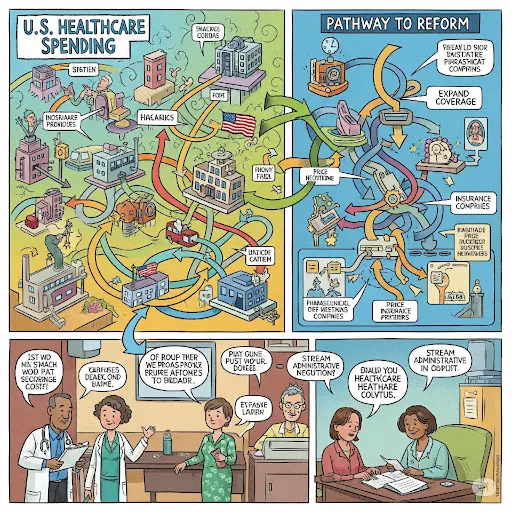
The central issue with American healthcare is not whether we spend too much or too little, but that we get a terrible return on our massive investment. The U.S. spends far more than any other nation yet achieves mediocre health outcomes, creating a crisis of value that results in widespread medical debt and economic strain. The solution isn't just adjusting spending; it's about fundamentally reforming the system to prioritize health over profit.
1. The Spending Anomaly: A Global Outlier
The U.S. healthcare system's cost is in a league of its own.
 * Spending as Share of Economy: The U.S. spends approximately 17% of its GDP on healthcare ($4.9 trillion). This is nearly double the average of other wealthy nations (which spend 11-12%).
 * Per Person Spending: In 2023, the U.S. spent an estimated $13,432 per person. This is almost twice the comparable country average of $7,393 and more than double what is spent in the U.K. and Japan.
 * A Recent Problem: This massive gap is not historic. U.S. spending was in line with its peers until the 1980s, when costs began to accelerate dramatically.
2. The Paradox: High Costs, Poor Outcomes
This record-breaking spending does not buy better health. In fact, it's the opposite.
 * Life Expectancy: The U.S. has the lowest life expectancy among its peers.
 * Avoidable Deaths: It has the highest rate of preventable deaths from conditions that could have been treated or avoided with effective care.
 * Maternal & Infant Mortality: The U.S. has the highest rates of both maternal and infant deaths among high-income countries, by a wide margin.
 * The Foundational Flaw: A key reason for these poor outcomes is that the U.S. is the only wealthy nation that does not guarantee universal health coverage, leaving over 28 million people uninsured. This leads to delayed care, worse outcomes, and higher costs for everyone.
3. Why Is It So Expensive? The Core Drivers
The exorbitant cost isn't because Americans get more care. It's because the system is structured to be wasteful and expensive.
 * Administrative Bloat: The single biggest driver is administrative complexity. The fragmented patchwork of public and private insurers creates a bureaucratic nightmare that accounts for an estimated 30% of excess U.S. spending.
 * It's the Prices: The U.S. pays drastically higher prices for the exact same things:
   * Hospital and Doctor Care: Hospitals and physicians leverage market power to charge private insurance multiples of what Medicare pays.
   * Labor Costs: U.S. physicians and nurses earn significantly more than their counterparts in other countries.
   * Prescription Drugs: The U.S. has the highest drug prices in the world, paying two to three times more for branded drugs.
 * Misaligned Incentives: The dominant "fee-for-service" model rewards the volume of tests and procedures, not the quality of care or how healthy patients are.
4. The Human Cost: A National Medical Debt Crisis
The system's high costs translate into devastating financial hardship for American families.
 * Widespread Debt: 41% of U.S. adults (about 107 million people) have medical or dental debt. This is a uniquely American problem.
 * Unequal Burden: The crisis hits hardest among Black (56%) and Hispanic (50%) adults, as well as low-income households.
 * A Vicious Cycle: Medical debt is a leading cause of bankruptcy. To cope, people cut spending on food and necessities, drain their savings, and, most critically, skip or delay needed medical care, which makes their health conditions worse and more expensive to treat later.
5. Pathways to Reform
Several solutions have been proposed, each with different levels of impact and disruption.
| Reform Model | How It Works | Potential Pros | Potential Cons |
|---|---|---|---|
| Price Transparency | Mandate public posting of prices. | Provides data for research. | Has proven ineffective at lowering costs; data is unusable for consumers. |
| Price Negotiation (IRA) | Government negotiates prices for some drugs. | Substantial cost savings with direct impact on high prices. | Industry claims it will harm innovation (this is heavily disputed). |
| Public Option | A government insurance plan competes with private ones. | Increases competition and choice; could lower premiums. | Impact depends on design; could struggle to attract doctors or drive private plans out. |
| Single-Payer System | One government fund replaces all private insurance. | Universal coverage; massive administrative savings; strong cost control. | Requires large tax increases; potential for wait times; major political/economic disruption. |
6. The Bottom Line: Strategic Recommendations
The U.S. doesn't need to simply spend more or less—it needs to fundamentally reallocate resources from waste and inflated prices to high-value care. The path forward requires a courageous, multi-pronged approach.
 * Control the Prices: Directly regulate and negotiate the prices of drugs, hospital care, and physician services.
 * Simplify the System: Drastically reduce administrative waste by standardizing billing and moving toward simpler payment models.
 * Reorient Toward Value: Shift from a "fee-for-service" model to payment systems that reward quality outcomes and invest heavily in primary and preventative care.
 * Guarantee Universal Access: Ensure every resident has comprehensive, affordable health coverage. This is a prerequisite for an efficient and moral system.

A Definitive Analysis of U.S. Healthcare Spending and Pathways to Reform

"Value and Volume: 
LIntroduction: Reframing the Question of U.S. Healthcare Expenditure
The question of whether American healthcare spending should be increased or decreased presents a false 
dichotomy. It presumes that the primary issue with the U.S. healthcare system is one of volume—too much or too little money—when the evidence overwhelmingly points to a crisis of value. The United States is a global anomaly, a nation that spends vastly more on healthcare than any other, yet achieves health outcomes that are mediocre at best and, in some cases, alarmingly poor. The core challenge, therefore, is not about adjusting the total sum of expenditure but about fundamentally reallocating those resources to achieve greater health and economic security for the population. The current system, characterized by its exorbitant costs and underwhelming performance, generates immense social and economic strain, a reality starkly illustrated by a medical debt crisis that affects over 100 million Americans and serves as a primary driver of personal bankruptcy.
This report provides a definitive analysis of this value proposition. It reframes the debate from a simplistic question of "more or less" to a nuanced exploration of why the U.S. spends so much and what it receives in return. The analysis begins by establishing the sheer scale of the American healthcare expenditure anomaly through a data-driven comparison with other high-income nations. It then confronts the central paradox of the system: the stark disconnect between this world-leading spending and its lagging health outcomes. Having diagnosed the problem, the report deconstructs its root causes, dissecting the primary drivers of cost, from administrative bloat and high prices to the misaligned incentives that permeate the system.
Subsequently, the report examines the profound human cost of this inefficiency, focusing on the pervasive crisis of medical debt and its devastating consequences for American families. With the problem and its causes clearly defined, the analysis shifts to a critical evaluation of proposed solutions. It weighs the potential and pitfalls of major policy reforms, ranging from incremental market-based adjustments to comprehensive systemic overhauls like a single-payer system or a public insurance option. A dedicated section delves into the most contentious issue in healthcare reform: the relationship between cost containment and medical innovation, seeking to move beyond polemics to an evidence-based assessment of the trade-offs. Finally, the report concludes by synthesizing these findings into a strategic framework for reform, arguing that the path forward lies not in marginal tweaks but in a courageous and concerted effort to build a system that prioritizes value over volume, health over profit, and the well-being of its citizens above all else.
Section I: The American Healthcare Expenditure Anomaly
To comprehend the challenges facing the U.S. healthcare system, one must first grasp the sheer magnitude of its spending. In every relevant metric, the United States stands as a profound global outlier, dedicating a share of its national wealth to healthcare that is unparalleled among its peers. This is not a recent development but the result of a decades-long divergence that has created a cost structure fundamentally different from that of other high-income nations. A detailed examination of the data reveals a system where spending has become decoupled from both the overall economy and the norms of the developed world.
Spending as a Share of the Economy
The most common macro-level indicator of healthcare investment is spending as a percentage of Gross Domestic Product (GDP). On this measure, the U.S. is in a category of its own. In 2021, the nation spent 17.8% of its GDP on healthcare, a figure that is nearly double the average of comparable countries in the Organisation for Economic Co-operation and Development (OECD). By 2023, this figure remained exceptionally high at 17.6%, or $4.9 trillion in total. This means that nearly one out of every five dollars spent in the U.S. economy goes toward healthcare goods and services. For context, other large, wealthy nations like Germany, France, and Canada spend significantly less, typically in the range of 11% to 12% of their GDP. This sustained, substantial deviation from international norms underscores a structural difference in how the U.S. finances and delivers care. While health spending as a share of the economy has been rising in nearly all developed countries since the 1980s, driven by new technologies and increased demand, the growth in the U.S. has been uniquely steep.
Per Capita Spending: A Tale of Two Tiers
Aggregate GDP figures can sometimes mask underlying population differences, but an analysis of per-person spending confirms the American anomaly. In 2023, health expenditures in the U.S. reached an estimated $13,432 per person. This amount is staggering when compared to other high-income nations. It is nearly twice the average of comparable countries, which stood at $7,393 per person. The gap between the U.S. and the next highest-spending country is also immense; U.S. per capita spending was over $3,700 more than in Switzerland ($9,688) and nearly $5,000 more than in Germany ($8,441). It was more than double the amount spent in the United Kingdom ($6,023) and Japan ($5,640). This per capita figure includes all sources of funding: public programs like Medicare and Medicaid, private employer-sponsored insurance, and out-of-pocket payments by individuals. The data unequivocally shows that the high cost of American healthcare is not just an artifact of a large economy but a reality experienced at the individual level, where the resources allocated per person are far beyond those of any other nation.
The Great Divergence: A Historical Perspective
The status of the U.S. as a high-spending outlier is not an immutable feature of its history. The divergence from its peers is a relatively recent phenomenon that began to accelerate in the 1980s. In 1970, the U.S. spent approximately 6.2% of its GDP on health, a figure that was broadly in line with other developed nations, where the average was about 4.9%. Throughout the 1970s, U.S. spending grew at a similar pace to that of its peers. However, beginning in the 1980s, U.S. health spending began to grow at a significantly faster rate relative to both its own economy and the spending in other countries. This historical trend is critical because it pinpoints a specific era where the structural drivers of high costs—such as the complex interplay between private insurers and providers, the rapid adoption of expensive new technologies without price controls, and the consolidation of hospital systems—began to take hold and propel the U.S. onto a different and much more expensive trajectory. The gap that opened in the 1980s has only widened in the subsequent decades, cementing a system that is structurally distinct from its international counterparts.
Public vs. Private Spending: A Pervasive Problem
A common misconception is that the high cost of U.S. healthcare is driven exclusively by the profits and administrative costs of its large private insurance sector. While these are significant factors, the data reveals a more complex reality: the problem of high spending is pervasive across both public and private payers. In fact, even when considering only public (i.e., government) spending, the U.S. still outspends most other nations. Public spending on health in the U.S. accounted for nearly half of all health expenditures in 2009, and in per capita terms, only Norway had higher public spending. This indicates that government programs like Medicare and Medicaid are also paying exceptionally high prices for healthcare services. The Medicare Payment Advisory Commission has estimated that private insurers pay prices that are, on average, 50% higher than what Medicare pays for identical services, highlighting the immense pricing power of providers in the private market. However, the fact that U.S. public spending alone is higher than the total spending in many countries with universal systems demonstrates that the issue is not merely one of private versus public financing. It points to a system-wide problem of high prices that affects every payer. Simply shifting all financing to the public sector, as in a single-payer model, would not solve the cost crisis without simultaneously addressing the underlying prices that all entities, public and private, are forced to pay.
Table 1: U.S. Healthcare Spending in Global Context (2023 Data)
| Country | Health Spending as % of GDP | Health Spending Per Capita (USD, PPP adjusted) |
|---|---|---|
| United States | 16.7% | $13,432 |
| Germany | 12.7% | $8,441 |
| Switzerland | 11.5% | $9,688 |
| France | 12.1% | $7,136 |
| Canada | 11.5% | $7,013 |
| United Kingdom | 11.1% | $6,023 |
| Japan | 11.4% | $5,640 |
| Comparable Country Average | 12.2% | $7,393 |
Source: KFF analysis of OECD data. Note: Data for some countries are provisional or estimated.
This table provides a stark, quantitative illustration of the American healthcare expenditure anomaly. The figures demonstrate that the U.S. not only leads in spending but does so by a margin that suggests a fundamentally different system. This financial reality sets the stage for the critical question that follows: what is this unprecedented level of spending achieving for the health of the American people?
Section II: The Paradox of Value: Correlating High Costs with Subpar Health Outcomes
The immense financial investment in the U.S. healthcare system, as detailed in the previous section, would perhaps be justifiable if it translated into world-leading health outcomes. However, the evidence paints a starkly different picture. The central paradox of A

Thursday, July 10, 2025

Split My Chest and Take My Heart

"You'll only understand when you become parents." I don't know if you've ever heard adults say this, but I have heard it many times. Even from my teachers.
The teachers would use this phrase when scolding the entire student body because they couldn't definitively identify who was responsible for pasting propaganda posters in the school toilets to incite high school students to join the '88 Uprising. As you know, a high school is full of eyes, so the school entrance, the notice board, and the snack stalls were not viable spots. The staircase landings were a possibility, but the teachers went up and down them more often than the students. In the end, with the culprit remaining unknown, it was decided that the inside surface of a toilet stall door was the best and most effective place to post the provocative flyers.
Even though this one issue was solved, another problem remained: the bag checks at the school entrance every morning. I don't know about other schools, but ours was co-ed. When they checked the girls, it was a cursory inspection, and if there were a lot of students, the girls weren't even checked at all. However, the "involved-in-everything" and "star-of-every-show" types were searched thoroughly, to the point of having to shake out our longyis. It was a good thing they didn't check us like they do at the toll gates. So, the situation presented a clear solution. The troublemakers, being used to jumping through hoops, were easily identified in these situations. Previously, whenever we wanted to bring a "Yadana Win Htein" magazine to school, we had to rely on the girls. They were trustworthy. In those days, it was fashionable to write in "auto-books," which were just school notebooks. We would hide the flyers between the pages, seal them in a paper bag, and tell them, "This is my girlfriend's diary. If my friends see it, you know what will happen." That way, even if they were checked, they wouldn't flinch. And so, the "free advertising spaces" on the inside of the school toilet doors became a place for spreading socialist revolutionary propaganda, with something new and fresh every day.
The teachers could never catch us red-handed. When they questioned us on suspicion, we wouldn't confess. So, they would lecture us at length about how grave our actions were, and that’s when they’d say it: "On the day you become parents, you will understand why we worry and just how much we have to worry." I still remember the name of the teacher who said this: Daw Kyu Kyu. To show you how mischievous we were, as she was leaving the classroom, I asked, "Teacher, you're not married, are you?"
She replied, "Go on, what are you trying to say?"
"Well, you said we'll only understand when we become parents, so I was just wondering how you would know."
"Oh yeah? Come here, I'll pinch your belly and explain it to you!" she retorted.
Over time, I had completely forgotten about this playful exchange.
Now that I am 53 years old, I find myself worrying about my teenage son in Yangon. Every time people tell me, "Your son is just like you," I start to wonder if I should go and live near my teenager if it's too difficult to bring him here. When I think about it, I can no longer sleep, tossing and turning in bed. I get up, go out for a cigarette, walk around, and wonder, "What should I do?" With no answer in sight, I blame the entire world. It is in those moments that I hear Teacher Daw Kyu Kyu's voice: "Son, do you understand now? What it means to 'only understand when you become a parent'."
Respectfully,
Agga

The Dark Side of the Fisheries Industry

(A story based on true events)
A young man in his early twenties was typing a resignation letter on his personal laptop. He was overwhelmed by frustration and anxiety, and filled with nothing but immense regret for his actions, which he could no longer undo.

Chapter 1
A Path Paved with Flowers

One could say that the young man named Thura was lucky. Right after finishing high school, he immediately got a job as a Protocol Officer at the Thailand-based Italian-Thai Company. Although he was happy to get the job, he didn't even know what a Protocol Officer did; he had never even heard of the position. A Thai woman, whom he had known since childhood as a friend of his father when his father was a government official in Myanmar, was now a director at that company. She was fond of him like a nephew and had hired him out of respect for his parents.The next day, he rode his black Kawasaki Ninja 2 motorcycle to a spacious compound on Inya Road in Yangon. At the front of the large compound stood an old, two-story colonial-style house. Within that compound, behind a second gate, was a modern three-story building. This large compound was the Myanmar branch office of the Italian-Thai Company, 
As soon as I arrived under the portico of the main house, a young man ran out and asked if I was Ko Thura. I just nodded. "Madam isn't here, she just went back to Bangkok this morning. Ko Banyar is waiting for you upstairs," he said, so I followed him.
Oh, when I met U Banyar in the room at the top of the stairs and he said, "Come, sit," I sat down in a chair, realizing it was the U Banyar I knew. Since I was young, whenever my Thai auntie (my current employer) came to the house, U Banyar was the one who drove her. I was fond of him just as I was of my auntie. Whatever the case, I felt encouraged.
"Uncle, I don't know anything, please help me out a bit," I said.
"Don't you worry about a thing. You have to take over my job now. It’s a perfect fit for you young people. Don't worry, for the matter of the two groups, I'll work with you before I retire," he replied.
"Uncle, are you retiring for good from your job?" I asked.
"Yes, of course. I'm over 60 now. What? Did you think I was a kid?" he joked. "You will have to take over this room. I'll give you advice. The old lady is yours to handle. After working for a month or two, there's a room downstairs where the former chairman of the Yangon Company used to sit. Just say you want to move to that room; you should move. The room is exceptionally decorated. Here, the old lady's office is just across the way, so if anything comes up, she tends to easily call out 'Banyar, Banyar,' so it would be like having two jobs as her assistant."
That day, we didn't talk much about work. During lunchtime, we ended up drinking beer at a restaurant, and in the evening, I went home. In the following days, as U Banyar taught and explained things to me, I realized that my job responsibility was very similar to that of a tour guide. The slight difference was that before the guests arrived, I had to meet in advance with the divisional commanders and ministers they wanted to see upon their arrival, and to ensure everything went smoothly, I had to meet with the office chiefs beforehand and give them large, substantial gifts.
Once the meeting dates were confirmed and hotel bookings were made, I had to type up a trip schedule plan, detailing everything from the day they arrived until the day they departed, noting the date and time, down to details like avoiding MSG and arranging special meals for those with diabetes. It even included taking them to nightclubs at night. I came to learn that this job was given the title of "Protocol Officer." In the beginning, being smartly dressed at every club started to feel like part of the job.

The Dark Side of the Fishing Industry (2)
======================
Chapter (2)
Selling dog meat with goat's head tied to it.

For Thura, using fax and email, along with programs like Excel and Word, was as natural as eating a meal. His typing skills were on par with a DTP operator. So, he sent a fax to the Thai head office detailing the business and investment opportunities in Myanmar, along with the personal information and a copy of the passport of the person who would be visiting. The rest of the arrangements were up to him. For example, let's say the objective was to explore opportunities for jade and gem mining in Myanmar.
Under normal circumstances, one could seek guidance from: (1) U Hla Myint, also known as Colonel Hla Myint, at the Nawarat Hotel, or (2) Ko Kyaw Win Oo, the son of Brigadier General Kyaw Win, the Director of the Directorate of Defence Services Procurement.
For the current matter, Ko Kyaw Win Oo had already made a call to the Office Head of the Ministry of Mines, a position equivalent to an Inner Secretary in modern terms. This role involved direct contact with the Minister, the Director-General, and all other directors. It was understood to be on par with a Director-level position or a Lieutenant Colonel, with an office within the Minister's wing. When dealing with the military and government departments, one had to speak sweetly and tactfully. However, based on the instructions from the person who provided the guidance, you had to make it happen, no matter what. You had to strive for the best possible outcome. For instance, if U Hla Myint said, "I've already spoken to Khin Nyunt, you just go and talk to the minister," you would respectfully go to the minister with a gift basket and say, "Minister, this is based on the guidance of U Hla Myint and General Khin Nyunt, so I would like the permit to be issued this month. This is the instruction I was given." You had to get the job done in one go.
Then, the relevant directors would provide a pile of application forms and maps. Once those were received, a report would be sent to the Thai businessperson detailing which parts of Myanmar produce jade and gems, the tax rates, the business operation models, the potential duration of the application process, and so on. If they gave the okay, a formal request for a meeting with the Minister would be submitted on behalf of the foreign national. Once the meeting date was confirmed, a fax would be sent to the Thai businessperson with the date they needed to arrive in Yangon. When they sent back a copy of their flight ticket, a detailed trip schedule was created. This schedule included everything from the airport pickup time, the hotel and room number, where and when they would have dinner, visits to pagodas and the Bogyoke Market, the meeting at the Minister's office, and finally, the drop-off time at the airport.
This detailed schedule was sent to Thailand. Sometimes, they might request changes, for example, to visit the Thai embassy during its opening hours. During that time, I would be at my office. Copies of the final schedule were then sent to the Thai boss, "Aunty," and Ko Kyaw Win Oo. With that, the preparatory tasks before their arrival were considered complete.
Now, let me elaborate a little on the jade and gem mining business. Once we met with the Minister and started the necessary work, the file was handed over to another person on our team, the Operations Officer. My work, on the other hand, involved a variety of other potential projects: orange groves, animal feed production, and freshwater fish farming. It was quite a mix.
Later, while having drinks with friends, I asked how the jade and gem venture went. "Was it successful?" I inquired.
The way he answered was telling. "Successful or not, I can't say for sure. But I can tell you that hundreds of thousands of dollars in profit were deposited into our office account."
My eyes widened. "What? How?" I pressed.
"Thura, don't ask so many questions. Do you want a Blue Label? I'll order. It's not on me, by the way. The 'old lady' [referring to the Thai boss] told me to treat you as well."
Only then, after much probing, did he explain how they made the profit. "You see, in the mining business, you don't just start digging. You have to conduct surveys and tests to see if it's commercially viable. To enable them to start their work, our team went in with machinery from the Thai side to clear the land. In the process, we cut down and sold all the teak trees growing there. We cleared the land and even built an access road for their research team before coming back."
"Wow," I thought, "how many teak trees were there?"
"Don't ask that," he said.
I thought to myself, "It seems they cleared the entire mountain until it was bald."

Tuesday, July 08, 2025

The dark side of Fisheries

( ဖြစ်ရပ်မှန် အသွင်ပြောင်း ဇတ်လမ်း ) 
သက် ၂၀ ကျော်လူငယ်တဦး သူ၏ ကိုယ်ပိုင် လက်တော့ဖြင့် အလုပ်ထွက်စာရေးနေသည်၊ စိတ်ပျက်ခြင်၊ စိုးရိမ်ခြင်း မျာကသူ့အာလွန်စွာဖိစီးနေသလို ပြန်လည်ပြင်စင်လို့ မရတော့သည့် သူ့၏လုပ်ရပ်များအတွက် နောင်တကြီးစွာရနေသည်မှအပ အခြားမရှိ။

အခန်း ( ၁ )
ပန်းခင်းသောလမ်း
သူရ ဆိုသည့် လူငယ် တယောက်ကံကောင်းသည်ဆိုရမည် သူအထက်တန်းကျောင်း အပြီးတာနဲ့  ထိုင်းနိင်ငံ အခြေပြု Itlian Thai company တွင် Protocol Officer အဖြစ်အလုပ် တန်ရလိုက်သည်၊ အလုပ်ရလို့ ဝမ်းသာရသော်လဲ Protocol  Officer ဆိုတာ ဘာလုပ်ရသည့်အလုပ် ဆိုတာကိုပင်သူမသိ ကြားပင် မကြားဖူး၊ သူ့ဖခင် အစိုးရအရာရှိအဖြစ် မြန်မာပြည်တွင်ရှိခဲ့စဥ်က အဖေ့မိတ်ဆွေအဖြစ် သူငယ်စဥ်ထဲက သိခဲ့သော ထိုင်းအမျိုးသမီးတဦးရှိပြီး ယခုထို Company ၏ Director တဦးဖြစ်နေလို့ သူမက မိမိအား တူသားကဲ့သို့ ခင်မင်းပြီး မိဘများမျက်နှာဖြင့် အလုပ်ခန်ခဲ့ခြင်းသာဖြစ်လေသည်၊ 
နောက်နေ့ သူ၏ Kawasaki Line 2 အနက်ေရာင် ဆိုင်ကယ်ဖြင့် ရန်ကုန်အင်ယားလမ်းအတွင်းရှိ ကျယ်ဝင်းလှသည် ခြံကြီးအတွင်း ရှေ့ဘက်ပိုင်းတွင် ရှေးခေတ် နှစ်ထပ်တိုက်ကြီးရှိပြီး ထိုခြံအတွင်း ဒုတိယ ခြံတခါးဖြင့် အတွင်း၌ ခေတ်မှီ ၃ ထပ်တိုက် တလုံးပါဝင်လေသည်၊ ထိုခြံကြီးသည် Itian Thai Company ၏ မြန်မာပြည်ဆိုင်ရာရုံးခွဲဖြစ်လေ ထိုသို့သူ စရောက်သော ထမနေ့ပင်ဖြစ်လေသည်။  

Operation Ghost Swarm v.4 for Myanmar PDF by Agga

 ​ ဒရုန်းအင်ဂျင်နီယာတစ်ယောက်ရဲ့ အမြင်အရ AliExpress နဲ့ Amazon တို့လို အရပ်ဘက်ဈေးကွက်တွေကနေ ဝယ်ယူပြီး Operation Ghost Swarm (Version 4) အတွက်...